Thinking about buying a Worcester multi-family as your first investment? You are not alone. With strong rental demand, a large renter base, and a housing stock that includes many 2-family and 3-family properties, Worcester can be an appealing place to start. The key is knowing how to evaluate income, expenses, property condition, and local rules before you buy. Let’s dive in.
Why Worcester draws investors
Worcester is a major rental market, and that matters if you are looking for consistent tenant demand. The city has about 50,000 rental dwellings, and its draft housing assessment reported a 2.1% vacancy rate, which points to a relatively tight rental environment. That same report noted an 11.6% increase in rental units over the prior decade, more than 1,000 multifamily units permitted from 2021 to 2023, and a need for 11,000+ additional rental units. According to the City of Worcester's housing and rental data, newly built multifamily units have also been absorbed quickly.
That does not mean every property is a good deal. It does mean you are shopping in a market where rental demand appears durable, but acquisition can be competitive. The same market snapshot cited an average Worcester home value of $423,326 and an average rent of $2,150 in late February 2026, which is why careful underwriting matters.
Start with the right property type
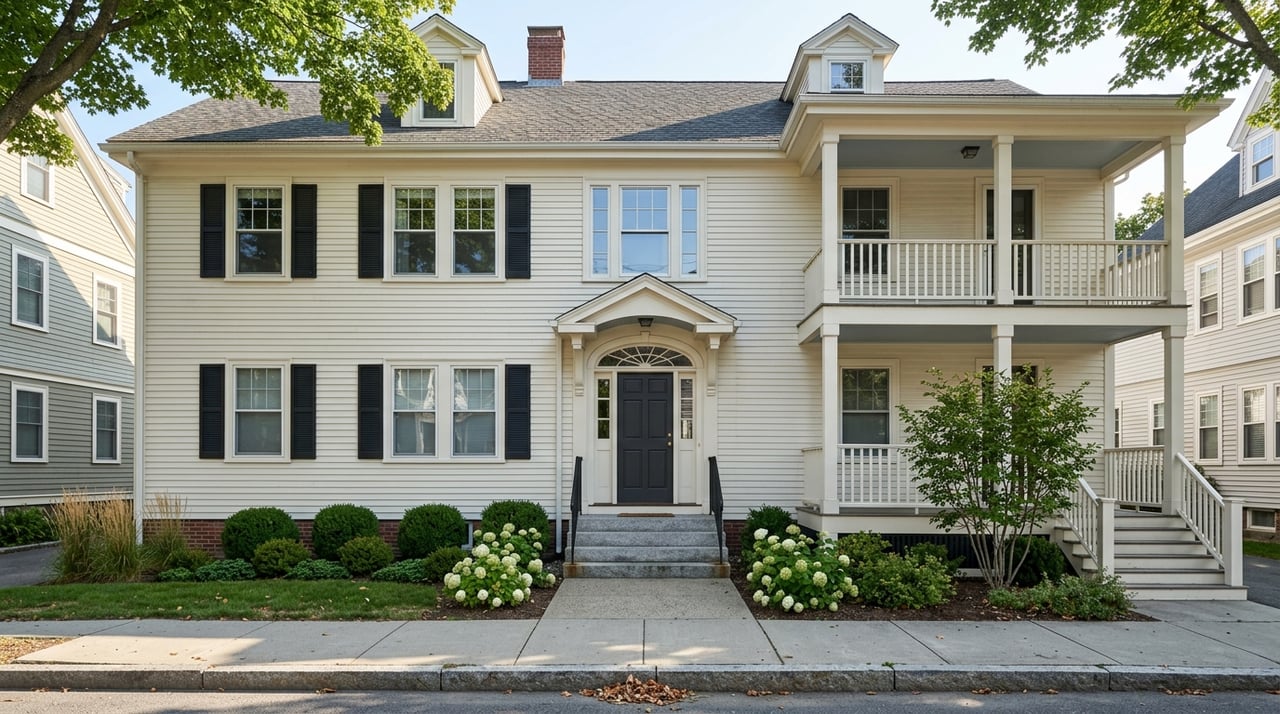
For many first-time investors in Worcester, the practical entry point is a 2-family or 3-family home. Worcester's zoning context helps make that possible. The city says two-family homes are allowed by right in 41% of Worcester, three-family homes in 24%, multifamily low-rise in 25%, and multifamily high-rise in 21%.
That matters because the path to ownership often looks different depending on unit count. In Worcester's zoning materials, multifamily is treated as 4+ units, so larger buildings and mixed-use properties usually need closer review of location, zoning, and compliance. If you are getting started, smaller multi-family properties may offer a more approachable way to learn the numbers and operations.
Know Worcester's older housing stock
One of the biggest realities in Worcester is age. The city's draft housing assessment said 59% of housing units are more than 50 years old, and a separate city announcement said 78% of housing was built before 1978. You can review that context in the Worcester Housing Needs Assessment.
For you as an investor, older buildings can create opportunity and risk at the same time. You may find classic triple-deckers and other small multi-family homes with strong rental appeal, but you also need to plan for deferred maintenance, modernization, and code-related repairs. In pre-1978 properties, lead-related work may also affect your budget and timeline.
Estimate rents with more than one benchmark
One of the most common mistakes new investors make is relying on one rent estimate. A better approach is to compare multiple benchmarks and then adjust based on the property's size, condition, and layout.
Zillow reported an average Worcester rent of $2,150 in February 2026. MassHousing's FY2026 Section 8 fair market rents for the Eastern Worcester HMFA were $1,493 for a studio, $1,651 for a 1-bedroom, $2,166 for a 2-bedroom, and $3,012 for a 3-bedroom. Those figures are not identical measures, but together they can help you frame a realistic rent range. The Zillow Worcester rent data is useful as a broad asking-rent snapshot, while fair market rents can help you compare unit sizes.
Bedroom mix also matters. Worcester's housing assessment points to the need for a mix of unit sizes for different household types, so a property with strong 2-bedroom or 3-bedroom layouts may underwrite differently than one with smaller or less flexible units. You want the unit mix to line up with actual renter demand, not just your best-case scenario.
Underwrite all the real expenses
Cash flow is not just rent minus mortgage. In Worcester, your numbers should account for both standard operating costs and city-specific obligations.
Common expense categories include:
- Property taxes
- Insurance
- Maintenance and repairs
- Utilities
- Turnover and vacancy
- Compliance costs
- Capital reserves
Worcester's current tax page lists residential real estate at $13.28 per $1,000 of assessed value and commercial real estate at $29.06 per $1,000. That difference is significant, so property classification matters when you run your projections. You can verify rates on the City of Worcester real estate tax page.
You should also budget for Worcester's rental registry requirements, inspection-related costs, and the higher maintenance profile that often comes with older buildings. Rough estimates can make a deal look better than it really is, so it helps to build your analysis around actual expenses whenever possible.
Understand inspections and local oversight
Worcester has active rental oversight, and you should know that before you close. The city states that multifamily buildings with 3+ units are subject to periodic inspections, and there are more than 6,500 properties in that program.
This is not necessarily a reason to avoid a property. It is a reason to prepare. If you are considering a building with three or more units, inspection timelines, access coordination, and any needed repairs should be part of your due diligence from the start.
The city's property owner and inspections information also notes that the owner or agent must be present for multi-family inspections. That is one example of where local coordination can make the process smoother.
Review Massachusetts landlord rules early
Before you buy, make sure your investment plan reflects Massachusetts requirements as well as local Worcester rules. The research provided here highlights two especially important points.
First, Massachusetts requires security deposits to be handled in a separate, interest-bearing account. Second, landlords must provide safe and sanitary housing in compliance with the Massachusetts Sanitary Code, as referenced in the city-backed sources above. These are operational details, but they can affect both your systems and your risk.
If you are building your first buy box, it is wise to involve a Massachusetts attorney, CPA, lender, and, when appropriate, a property manager before you commit. That kind of team can help you evaluate whether the property works on paper and in practice.
Focus on the numbers that matter
When you compare Worcester multi-family opportunities, keep your analysis simple and disciplined. You want to understand whether expected rent can support vacancy, operating expenses, and debt service without leaning on unrealistic assumptions.
A good first-pass review should include:
- Current and projected rents by unit
- Unit mix and layout appeal
- Vacancy assumption
- Property tax classification
- Insurance estimate
- Repairs and reserve budget
- Inspection and compliance costs
- Age-related upgrades or lead-related work
- Financing terms and monthly debt service
If the numbers only work when everything goes perfectly, the deal may be too tight. In a market with strong demand but competitive pricing, disciplined underwriting can protect you from overpaying.
How a local agent helps you buy smarter
A local agent can do more than open doors. In Worcester, that value often shows up in the details that affect your timeline, budget, and leasing strategy.
For example, an agent can help you compare submarkets, assess realistic rent ranges, coordinate access for inspections, and flag issues tied to zoning, unit count, or older-building condition. The city also points property owners toward resources like the Landlord Summit, which helps landlords connect with departments, local organizations, and programs.
If you are buying your first multi-family, that kind of local guidance can help you ask better questions before you are under pressure. It is not a substitute for legal or tax advice, but it can make your acquisition process more organized and more informed.
A smart first step for Worcester investors
If you are just getting started, Worcester can offer a practical path into multi-family investing, especially if you focus on smaller properties and underwrite carefully. The city has clear signs of rental demand, a housing stock that supports small multi-family ownership, and enough complexity that preparation really matters.
The best first purchase is not always the biggest property or the one with the highest advertised rent. It is the one you understand, can operate responsibly, and can hold with confidence. If you want a local, hands-on guide as you evaluate Worcester multi-family opportunities, Christina Liberty-Grimm can help you navigate the search with responsive service, local insight, and a clear process.
FAQs
What makes Worcester a strong market for multi-family investing?
- Worcester has about 50,000 rental dwellings, a reported 2.1% vacancy rate, quick absorption of new multifamily units, and an estimated need for more than 11,000 additional rental units.
What property type is best for a first Worcester multi-family investment?
- For many first-time investors, a 2-family or 3-family home is the most practical starting point because these property types are common and often simpler to evaluate than larger multifamily buildings.
What rent numbers should you use for Worcester multi-family underwriting?
- A smart approach is to compare multiple benchmarks, including Zillow's average Worcester rent of $2,150 and MassHousing's FY2026 fair market rents by bedroom count, then adjust for the property's condition, layout, and location.
What Worcester expenses should you include before buying a multi-family?
- You should account for property taxes, insurance, maintenance, utilities, turnover, reserves, rental registry costs, periodic inspections, and possible lead-related or age-related repair work.
What inspection rules apply to Worcester multi-family properties?
- According to the city, multifamily buildings with 3 or more units are subject to periodic inspections, and the owner or agent must be present for those inspections.
What Massachusetts rules should new Worcester landlords know?
- Massachusetts requires security deposits to be held in a separate, interest-bearing account, and landlords must provide safe and sanitary housing that complies with the Massachusetts Sanitary Code.