Last December, at a routine meeting of Hopkinton's Water & Sewer Advisory Board, resident Ken Weismantel raised his hand about something that had nothing to do with home values. Salt piles had returned to the parking lot at Legacy Farms, the town's largest new-construction neighborhood. "I'm about ready to do a formal complaint to the zoning enforcement officer," he told the board, according to the Hopkinton Independent. Department of Public Works Director Kerry Reed clarified what was actually at stake: the piles sat inside the town's Water Resources Protection Overlay District, and stockpiling road salt there without containment violates the bylaw built to protect the aquifer underneath.
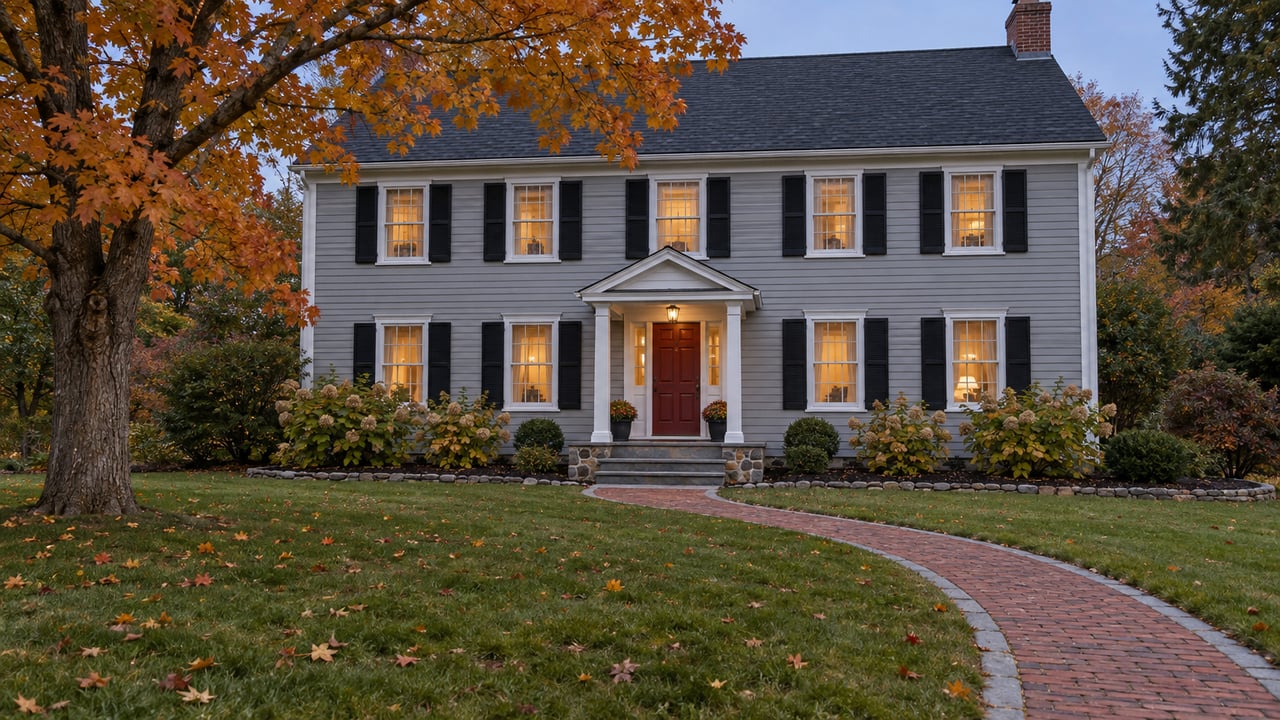
A pile of salt in a parking lot is a small thing. But the reason it drew a formal warning, in a neighborhood of brand-new $800,000-plus homes, says more about Hopkinton than any listing sheet will. This is a town where the water underneath the ground is already in trouble, and every additional risk to it gets taken seriously because the town has almost no room left to absorb one.
The Rule Behind the Complaint
Hopkinton's aquifer protection bylaw exists because the town draws its drinking water from wells, not from the same MWRA reservoir system that serves Boston and dozens of surrounding communities. Legacy Farms itself, a 700-plus acre master-planned community built on the former Weston Nurseries site, sits inside that protected zone. The rule that flagged the salt piles is the same rule that governs what any homeowner in that overlay district can store, spread, or build near their own well recharge area.
That distinction, well water versus MWRA water, is the single biggest thing separating Hopkinton from several of its MetroWest neighbors, and it's currently costing Hopkinton homeowners real money.
The Bill Behind the Bylaw
Hopkinton's water and sewer rates have climbed in three consecutive jumps. Board discussions in 2025 referenced a roughly 40 percent rate increase the town had already absorbed the year before. For fiscal year 2026, effective July 2025, the town's own rate page lists a $65.23 minimum water bill and an $11.68 sewer rate per 100 cubic feet at the lowest usage tier. One year later, for fiscal year 2027, those numbers jumped again.
| Fiscal Year | Effective Date | Minimum Water Bill | Sewer Rate (0-1,000 cf) | Rate Increase |
|---|---|---|---|---|
| FY26 | 7/1/2025 | $65.23 | $11.68 per 100 cf | Recommended 10.5% water / 10% sewer |
| FY27 | 7/1/2026 | $75.01 | $15.18 per 100 cf | 15% water / 30% sewer |
A 30 percent jump in sewer rates in a single year isn't a rounding error. Board members who approved the FY27 increase said an aggressive rate plan was necessary to build reserves ahead of larger costs still coming, a reference to the town's plan to connect to the Massachusetts Water Resources Authority system.
Why the Water Needs Fixing At All
The rate increases trace back to a specific problem: PFAS, the so-called forever chemicals, showed up in several of Hopkinton's wells above the state's safety threshold starting in 2021, and above the EPA's newer, stricter 4 parts-per-trillion standard once that rule took effect in 2024. The town activated a temporary full-scale treatment system at its largest well, Fruit Street Well #6, in June 2024. The Hopkinton Independent reported Reed's description of the result: "The system is in operation, and cleaner water is flowing to users." MassDEP approved that temporary fix only through July 2027, after which Hopkinton needs either a permanent treatment plant or a connection to a PFAS-free supply.
That well matters more than its name suggests. Fruit Street #6 alone provides 0.72 million gallons a day, and losing it drops the town's total water capacity from 2.6 million gallons a day to 1.88 million. Hopkinton grew 25.7 percent between the 2010 and 2020 census counts, and three of the town's original eight wells are already offline for quality issues. The margin for error here is thin, which is part of why an unauthorized pile of salt near a recharge area draws immediate attention.
Why the Permanent Fix Keeps Sliding
Hopkinton's plan is to connect to the MWRA system by running a pipeline through Southborough, tapping into a supply that Southborough's own officials describe as backed by roughly 475 billion gallons across the Quabbin and Wachusett reservoirs, enough to cover the region for years even in a drought.
The timeline for that connection has moved. The town's official project page still lists 2028-29 as a possible construction start, contingent on funding and approvals. But by 2025, Water & Sewer Advisory Board members were describing 2030-32 as the point Hopkinton would actually see MWRA water reach a tap, not just break ground. As of September 2026, the intermunicipal agreement between the two towns is still tied up in Southborough's special counsel review, which has to clear before Southborough will even peer-review Hopkinton's design plans.
Meanwhile, the town's backup arrangement is also uncertain. Hopkinton buys about 40 percent of its water from Ashland under an agreement first signed in 1998 and renewed in 2023 for three years. That renewal expired June 30, 2026, and as of the most recent public reporting, it was still unclear whether Ashland would extend it.
Engineers hired by the town laid out the tradeoffs at a March 2026 board meeting. Doing nothing was ruled out given the town's ongoing drought status. Drilling more wells was ruled out too, on the grounds it would stress groundwater basins that are already tapped out. That leaves a full MWRA connection, which depends on a single outside source, or a blend of MWRA and continued Ashland purchases, which depends on a neighboring town's willingness to keep selling. Neither option is fast, and neither is fully in Hopkinton's control.
Hopkinton has also been under a Level 1 Mild Drought designation for more than a year, with an active ban on non-essential outdoor water use still in place as of this September. And the near-term costs aren't only about pipelines. The carbon filtration media used to strip PFAS at the treatment plant has to be replaced roughly every 18 months, an expense town officials are still working to build into the annual budget. A Special Town Meeting scheduled for October 26, 2026 includes warrant articles for an emergency water main replacement on Claflin Place and a wastewater treatment plant screen replacement, both signs that infrastructure spending here isn't slowing down.
What This Means If You're Comparing Hopkinton to a Town Already on MWRA
Here's the part that doesn't show up in a side-by-side price comparison. A home in Hopkinton and a comparably priced home in a town like Southborough, which is already fully on MWRA water, can look identical on a spreadsheet. One of them carries a utility bill trajectory that's climbed by double digits three years running, with more rate increases already flagged by the town's own advisory board as necessary to cover a connection project that keeps slipping further out. The other doesn't.
None of this means values in Hopkinton are falling. The Legacy Farms development, where the salt complaint originated, is still an active market: as of late September 2026, homes there carried a median list price around $845,000 with roughly 82 days on market. Top-tier schools, MBTA access, and hundreds of acres of preserved open space remain real draws. But a buyer weighing Hopkinton against a nearby MWRA town should treat the utility bill as part of the comparison, not a footnote to it.
A few questions are worth asking before you make that comparison:
- Is this specific property on Hopkinton's municipal water system, or on a private well? The Water Resources Protection Overlay District applies differently depending on the answer.
- If it's on town water, ask what rate tier the household falls into. The jump from the low tier to higher usage tiers is steep, and outdoor irrigation during a mild drought can push a household into a higher bracket fast.
- If landscaping or a pool is part of the plan, check the town's current outdoor water restrictions before assuming that's included in day-to-day cost.
- Ask whether the seller has documentation of recent water quality testing, particularly if the home draws from one of the wells that has needed PFAS treatment.
None of this is a reason to avoid Hopkinton. It's a reason to ask sharper questions before comparing it to a town that solved this problem decades ago.
A Few Direct Answers
Is Hopkinton's water safe to drink right now? The town's treated wells, including Fruit Street #6, are operating under an active PFAS treatment system approved by MassDEP through July 2027. Testing results are made public on an ongoing basis through the town's Water Department.
Does every home in Hopkinton rely on this system? No. Some properties, particularly in parts of town outside the municipal service area, use private wells rather than town water. Whether a specific address is on the municipal system is something to confirm before comparing costs.
Will the MWRA connection actually lower rates once it's built? Town officials have said the goal is a more reliable, PFAS-free supply, not necessarily lower short-term bills. The current rate increases are partly meant to fund the connection itself.
If you're weighing a move to Hopkinton against a nearby town and want a clearer read on what a specific property's water situation actually looks like, Christina Liberty-Grimm can walk through it with you, well, town system, or otherwise, before you get to an offer.
This article is general information, not legal, tax or financial advice. Consult a qualified professional about your situation.